
Deep Vein Thrombosis
Dr Andrew Bullen is an experienced vascular surgeon who can advise you on the best treatment and future prevention options for deep vein thrombosis.
What is deep vein thrombosis?
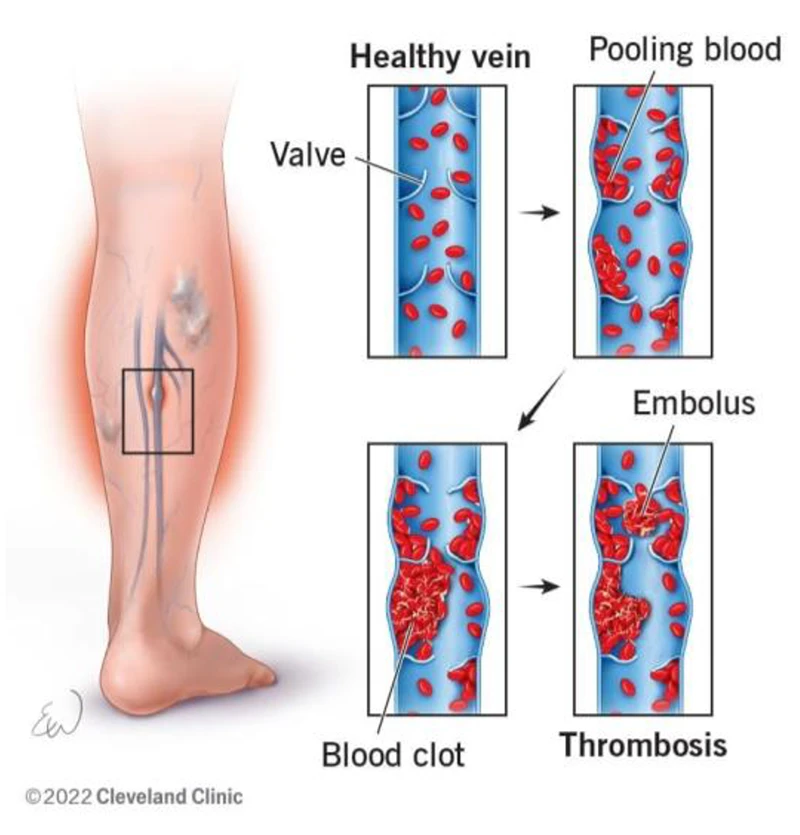
Veins are blood vessels that return oxygen-depleted blood to the heart for reoxygenation. There are two types of veins in the body:
- Superficial veins lie just below the skin’s surface
- Deep veins are not visible through the skin but are located deep within the muscles
Deep vein thrombosis (DVT) occurs when a blood clot forms in one of the deep veins in the body. DVT can occur anywhere but is usually seen in the leg.
The clot can partially or completely block the flow of blood, which can lead to potentially serious health effects.
DVT affects about 1 in 1,000 adults per year. Nearly 30% of patients have a recurrence within 10 years.
What are the symptoms of a DVT?
Symptoms usually affect one leg and can include:
- Leg swelling
- Leg pain, cramping or soreness that often starts in the calf
- Change in skin colour of the leg (red, pale or blue)
- A feeling of warmth on the leg
For some people, there are no noticeable symptoms.
What causes a DVT?
Anything that slows blood flow in the deep veins can increase the risk of DVT. Risk factors include:
- Being over 40 years old
- Being overweight/obese
- Personal/family history of blood clots
- Certain medical conditions such as varicose veins and cancers
- Sitting or lying for long periods of time e.g. being immobile after surgery or serious injury, going on a long journey (> 4 hours) by plane, car or train
- Using oral contraceptive pills or hormone replacement therapy containing oestrogen
- Being pregnant or if you delivered a baby in the previous 6 weeks
- Smoking tobacco
Sometimes, DVT can occur for no clear reason.
How are DVTs diagnosed?
The doctor will first ask about your symptoms, review your medical history and do a physical exam (check legs for swelling, tenderness or changes in colour).
Afterwards, if your doctor suspects that you have DVT, they may order one or more tests:
- Duplex venous ultrasound is the standard test for diagnosing DVT as it is non-invasive and widely available. It shows if blood is flowing normally or if there are blood clots in your veins.
- D-dimer blood test: can help detect blood clots. Blood clots produce a protein called D-dimer. If the D-dimer test is negative, this can help rule out DVT.
- X-ray of the vein (venogram): a dye is injected into large veins under a special X-ray to identify a blockage.
- Magnetic resonance imaging (MRI) or Magnetic resonance venography (MRV): MRI shows pictures of organs and structures inside your body including blood vessels and veins. MRV shows images of the veins in specific locations in your body.
- Chest CT scan: ordered if there is a risk that part of the blood clot has travelled to your lungs (pulmonary embolism)
What are the risks of having a DVT?
If DVT is not treated, it can cause complications including inflammation of the vein (phlebitis), permanent swelling and pulmonary embolism.
Pulmonary embolism (PE)
This is the most serious complication of DVT as it can be life-threatening. It occurs when the clot leaves the leg vein and travels through your bloodstream to the lungs.
When the clot lodges in a blood vessel in the lung, the lung tissue is starved of blood and oxygen. Symptoms can include: chest pain, shortness of breath, coughing up blood, light-headedness and rapid pulse.Post-thrombotic syndrome
Some people who have a DVT develop long-term symptoms in the calf e.g. pain, swelling, skin colour changes and leg ulcers.It is caused when damage to the veins results in higher-than-normal blood pressure in the veins. This increased pressure can damage the valves that regulate blood flow through the veins. This causes blood to accumulate at the site.
What is the treatment for DVT?
After DVT is diagnosed, treatments include the following:
- Anticoagulant medication: these thin the blood to stop clots from getting bigger and reduce the risk of blood clots from moving elsewhere. You may have to take it for several months or longer depending on the cause and location of the clot
- Compression stockings: You may also be asked to wear prescription graded elastic compression stockings to reduce leg swelling.
- Regular exercise can help to prevent blood pooling and help circulation
- Elevation of affected leg(s) between mobilising throughout the day.
- Staying hydrated is important to reduce the blood thickening.
In a minority of cases, when DVT is very severe, a medicine is used to break down the clot. They are injected via a tube directly into the blood clot. You normally need to stay in hospital when this is given as it can cause serious bleeding.
How can a DVT be prevented?
If you are travelling, you can reduce your risk of developing DVT by:
- Wearing compression stockings to help blood pooling.
- Performing leg and foot exercises regularly to keep your calf muscles active while you are sitting.
- Standing up and walking regularly if you are on a long flight
- Getting out of your car and walking around every hour if you’re on a long road trip
- Drinking plenty of water
If you are hospitalised, you can reduce your risk of developing DVT by:
- Getting out of bed and moving around as soon as you can after you’re sick or had surgery
- Taking anticoagulant medication to prevent clots from forming (if advised by your doctor)
If you have already had a DVT, you can reduce your risk of future DVT by:
- Wearing compression stockings
- Taking anticoagulant medication to prevent more clots from forming
- Avoid smoking tobacco
- Being physically active
- Following a healthy eating pattern
- Maintaining a healthy weight
For appointments and enquiries, please phone 02 4243 8050
Monday to Friday 8 am – 5 pm
FAX 02 4243 8049
© Circulation Health | Privacy Policy | Disclaimer | Website by: 