
Venous Access Devices
At Circulation Health, we provide insertion and management of Portacaths by a specialist vascular surgeon. Safe, minimally invasive access for long-term treatments such as chemotherapy or IV therapy.
What is a Portacath?
A Portacath is a type of device recommended for patients who regularly have:
- Chemotherapy
- Medication infusions
- Nutritional supplementation
Your oncologist may recommend that you have a Portacath inserted in your upper chest to make chemotherapy easier and more comfortable for you. There are several benefits to having a Port:
- No need to find a vein every time you receive chemo. A special needle fits into the port.
- Some types of chemotherapy can be very uncomfortable if injected into an arm vein just under your skin. A Port avoids this potential discomfort.
- Blood tests can also usually be taken via the Port, decreasing the number of times you need to have needles.
- You can still exercise and swim as normal.
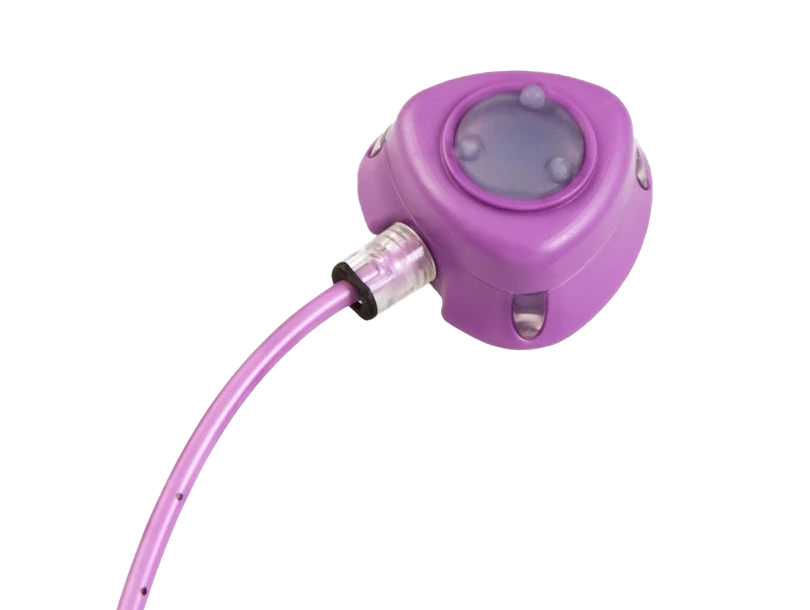
How is the Portacath inserted?
A small 4-5cm incision is made on the chest and a button the size of several stacked $1 coins is inserted into a pocket over the chest muscle and secured. It will be visible as a bump underneath the skin.
The silicon tubing attached to the button is then inserted into one of the large veins in the neck or shoulder using a keyhole technique under ultrasound and X-ray. Once inserted, the entire device is buried in the soft tissue layer and the body heals around the device.
How do Portacaths work?
When access to your veins is required, a special needle is inserted through your skin into the Port and sits securely in the device. When fluid is injected through the needle it goes into the button and through the attached tubing directly into your vein. These needles have some padding around them and once inserted should cause you little to no discomfort. A piece of plastic tubing is attached to the needle into which your medications are administrated.
What are the risks of having a Portacath?
Most commonly people experience mild discomfort, swelling and bruising at the site initially following the procedure. Infection of the wound or device is important to avoid, and strong antibiotics will be given at the time of the procedure. Major bleeding at the site, injury to other nearby vessels or the lung is uncommon.
Device malfunction, clot around or within the tubing and scar tissue formation are all monitored by your doctor and the device is flushed regularly to maintain function.
Post-insertion care instructions
Following insertion, you will need to keep the wound clean and dry to reduce the risk of infection.
Dressings will be managed by nursing staff to assist in caring for the site until healed. The woulds are infiltrated with local anaesthesia during the procedure. However, most people require regular oral analgesia such as paracetamol for the first few days. Stronger medications can be prescribed if needed.
Icing the area with an ice pack regularly in the first few days after your insertion procedure can help recovery.
Dissolvable sutures are typically used and therefore do not require removal. The site is monitored for signs of infection (i.e. redness, worsening swelling or discomfort) until fully healed.
Once healed, the site can be wet and normal activities can be undertaken.
For appointments and enquiries, please phone 02 4243 8050
Monday to Friday 8 am – 5 pm
FAX 02 4243 8049
© Circulation Health | Privacy Policy | Disclaimer | Website by: 